Skip to content
CreweColours Street Art FestivalExplore the map

Editorial · Crewe street-art culture

Junkyard
Jam.

Paint. Metal. Impermanence.

Paint across a bonnet. A line bending around a panel. Colour against scrap metal. Junkyard Jam is a unique private, invitation-only event where artists and urban-art collectives come together to showcase their work on temporary surfaces. Away from the public programme, each surface becomes a place to make a mark. Some painted vehicles are later crushed; the photographs hold onto moments that the metal cannot.

It starts with a name.

Begin with a name. Picture its letters stretched across a wall or carried through the city on a subway train. Modern graffiti emerged in the mid-to-late 1960s and spread through New York in the early 1970s, as writers turned signatures into something to draw, repeat and recognise.

Follow the lettering as it becomes more elaborate. A curve opens out; a line folds back on itself; colour changes the rhythm. Beyond reading the word, there is the experience of seeing it — how it fills a surface and holds your attention.
Who gets to leave a mark?

Look around a street. Adverts ask for your attention; signs point the way; buildings frame the view. Then a painted name cuts across it. Who gets to leave a mark here? Graffiti brings that question into the everyday encounter with a place, where permission, ownership and expression do not always sit comfortably together.

Stay with that tension rather than settling for one answer. A mark might speak of identity, protest, belonging or the pleasure of making letters; another viewer might see an intrusion. There is no single graffiti ideology. A commissioned mural and an unauthorised tag can share a visual language without making the same claim on a space.

The surface talks back.

Follow a painted line across a vehicle. A window breaks it; a panel shifts it; a curve pulls it out of shape. Look for the metal beneath the colour. This is not a blank canvas, and that is the point: the surface has its own presence in the picture.

Let your eye move between the image and the object. One moment you see the painting, the next a door, a bonnet, the outline of something familiar. Colour can follow a contour or argue with it. The pleasure is in that back-and-forth: an everyday thing becoming unfamiliar again.

Made now. Not forever.

Give a temporary painting your time. Notice the decisions in it, the marks that remain visible, the meeting of colour and surface. It does not need to last forever to hold your attention. Making, looking and remembering are part of its life too.

Some painted vehicles at Junkyard Jam are later crushed. Keep that thought beside the photographs: the image you are looking at may outlast its surface. Return to a detail, hold it in memory, then move on. What remains here is a moment in the life of the work.

The archive

2022

Junkyard Jam 5 (year not stated)

Crushed vs. kept.

Hold a fleeting painted moment beside a mural made to stay. One asks you to notice it before it changes; the other invites you to return. Seen together, they open up different ways of thinking about colour, memory and Crewe’s creative life.

Art and Crewe’s identity →Explore the painting areas
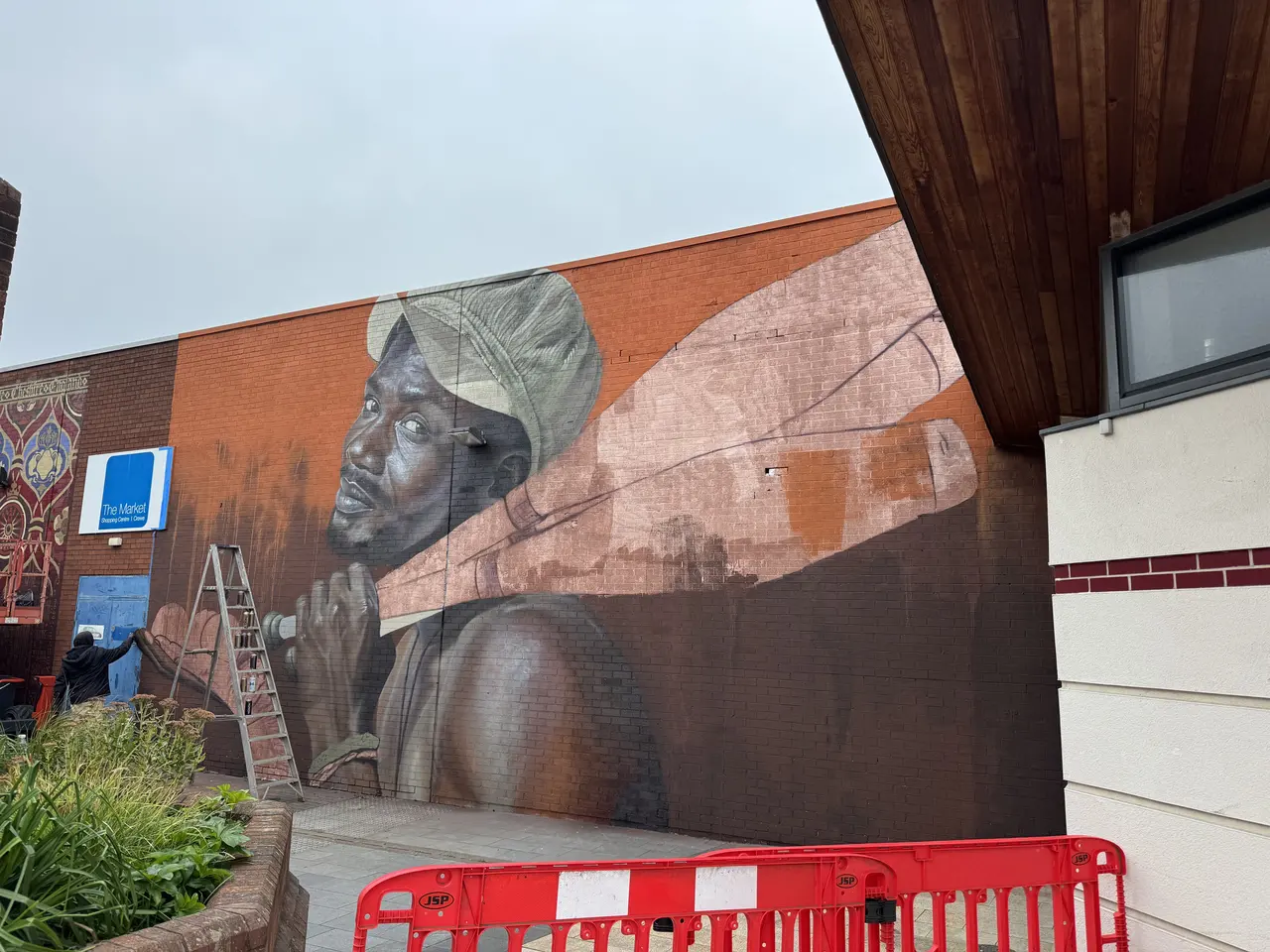
Work in progress: a large photorealistic portrait of a man in a cap carrying a long wooden beam, painted across a rust-red brick wall behind safety barriers. A ladder stands at the wall.